
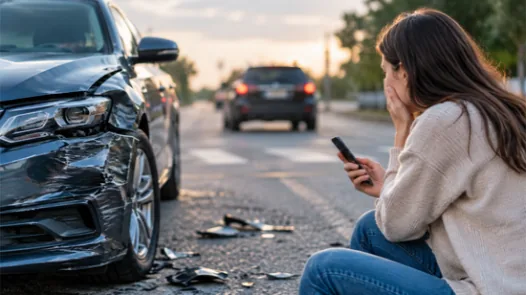
What to Do After a Hit-and-Run Accident in Illinois
By Christopher Panio, Personal Injury Attorney, Panio Law Offices. Last reviewed October 2026.After a hit-and-run in Illinois, call 911, get medical care, document everything you can, and report the crash to your own insurance company. If the driver is never found, your uninsured motorist (UM) coverage can pay for your injuries under 215 ILCS 5/143a. If the driver is found, you generally have two years to sue under 735 ILCS 5/13-202.
One second you are driving home or crossing a parking lot, and the next there is a loud bang and the other driver is gone. Your heart is pounding and you have no idea who just hit you. Hit-and-run claims are part of our wider car accident practice.
Key facts
- Leaving the scene of a crash is a crime in Illinois and a felony when someone is hurt (625 ILCS 5/11-401)
- If the driver is never found, your own UM coverage is the main source of payment for injuries (215 ILCS 5/143a)
- Illinois requires UM coverage on auto liability policies, and the statute names hit-and-run vehicles
- Car repairs usually go through your collision coverage, because UM property damage coverage does not apply to an unidentified driver
- Deadline to sue an identified driver: two years (735 ILCS 5/13-202)
- Your policy may set shorter deadlines for police reports and notice to your insurer
What to Do After a Hit-and-Run in Illinois, Step by Step
-
Get to safety and call 911.
If your car can be driven, move it out of traffic and turn on your hazard lights. If you are on foot or a bike, get onto the sidewalk. If you are badly hurt or think moving could make an injury worse, stay where you are and wait for help. Do not chase the other driver. Tell the dispatcher where you are, that the other driver left, and about any injuries, and say which direction the car went. Ask the officer for the report number before they leave.
-
Write down everything you remember about the other vehicle.
Your memory fades fast. Note the color, make, model, any part of the license plate, the state, damage, stickers, roof racks, tinted windows, and the direction it went. If you saw the driver, note what they looked like. A voice note works. A partial plate still helps police when they combine it with other evidence.
-
Document the scene.
Photograph the damage to your car from several angles, debris, skid marks, street signs, and the wider scene. Paint scratches or broken pieces left behind can help identify the vehicle. Photograph visible injuries now and again over the next few days as bruises develop. Save any dash cam footage right away. Get names and phone numbers from anyone who saw it.
-
Look for security cameras fast.
Stores, gas stations, apartment buildings, and intersections often have cameras, and many systems erase footage within days or weeks. Tell the police about any camera you see, and if it is safe, ask the owner to save the video. A lawyer can send a formal preservation request later, but the sooner someone asks, the better the odds the footage still exists.
-
Get medical care the same day.
Adrenaline hides pain, and whiplash, concussions, and internal bruising do not always show up right away. Tell the doctor exactly what happened and describe every symptom. This protects your health and creates a medical record linking your injuries to the crash, which is the kind of evidence that can strengthen a personal injury claim. Go to your follow-up visits.
-
Report the crash to your own insurance company.
Give the date, time, and location, say the other driver left, and say you filed a police report. You do not need to give a long recorded statement or guess about your injuries. Ask that your claim be reviewed under your UM, collision, and medical payments coverage. Read your policy, because it may require a prompt police report and prompt notice to the insurer.
-
Talk to a lawyer before you accept an offer or sign anything.
Hit-and-run claims often run through your own policy, so your insurer is on the other side of the table. Stay off social media until your claim is resolved, since insurers sometimes check it and a photo or a comment like "I'm fine" can be used against you.
What Illinois Law Required the Other Driver to Do
Under 625 ILCS 5/11-401, a driver in a crash that injures or kills someone must stop at the scene or return to it and stay until they have met their duties under 625 ILCS 5/11-403. Those duties include giving their name, address, and vehicle registration and providing reasonable help to anyone who is hurt. Leaving after a crash that injures someone is a felony. In a crash that damages only property, 625 ILCS 5/11-402 sets a similar duty to stop and share information, and leaving is a misdemeanor.
Criminal charges against the driver do not pay your bills. Your compensation is a separate civil claim, and it does not depend on police finding the driver.
How You Get Paid When the Driver Is Never Found
Which coverage pays depends on what you need paid and whether the driver is ever identified.
| What you need paid | If the driver is never found | If the driver is found |
|---|---|---|
| Your injuries and lost income | Your UM bodily injury coverage (215 ILCS 5/143a(1)) | The driver's liability insurance |
| Car repairs | Your collision coverage, minus your deductible | The driver's property damage liability coverage |
| Early medical bills | Your medical payments coverage, if you have it | The driver's liability insurance, or your medical payments coverage |
Uninsured Motorist Coverage
Illinois requires auto liability policies to include uninsured motorist coverage, and 215 ILCS 5/143a names hit-and-run motor vehicles alongside uninsured ones. If the driver who hit you is never identified, you can make a claim on your own policy for bodily injury. The minimum limits come from 625 ILCS 5/7-203, which is $25,000 per person and $50,000 per accident. Illinois also generally requires UM limits to match your liability limits unless you reject the higher amount in writing (215 ILCS 5/143a-2), so check your declarations page. Our guide to uninsured motorist coverage in Illinois explains what it pays for.
Under 215 ILCS 5/143a(1), disputes over UM coverage and the amount of damages generally go to arbitration instead of a jury, and the policy must say so.
Car Repairs and Early Medical Bills
UM bodily injury coverage does not repair your car. Illinois also offers optional UM property damage coverage, but the statute says it does not apply when the hit-and-run driver cannot be identified (215 ILCS 5/143a(2)). Repairs usually go through your collision coverage, minus your deductible. Medical payments coverage, if you have it, can help with early medical bills regardless of fault.
If the Driver Is Found or Your Insurer Pushes Back
If police identify the driver, you can bring a negligence claim against the driver and their liability insurer. If that driver turns out to have no insurance, your UM coverage applies in the same way.
When the claim runs through your own policy, your own insurer won't always treat you as kindly as you expect. It is still a business, and it may try to pay less than your claim is worth.
Deadlines for a Hit-and-Run Claim
A lawsuit against an identified driver must generally be filed within two years of the crash under 735 ILCS 5/13-202. Our guide to Illinois filing deadlines explains exceptions, including the one-year limit for claims against local governments.
Your UM claim runs on the terms of your policy. Your policy may require you to start arbitration or file suit within two years of the crash, and its notice and police-report requirements can be much shorter. Treat the clock as if it started the day of the crash.
Talk to a Lawyer Before You Sign Anything
Hit-and-run cases are harder than most car accident claims. There may be no at-fault driver to pursue, and the claim often depends on how your policy reads. A personal injury lawyer can review your policy, work out which coverage applies, deal with the adjusters, and keep pushing to identify the driver. Most personal injury attorneys, including ours, offer free consultations and only get paid if you win.
Were you hit by a driver who fled the scene?
Contact the experienced Chicago personal injury attorneys at Panio Law Offices today for a free consultation and find out how to protect your claim.
This article was written and reviewed by Christopher Panio, an Illinois personal injury attorney licensed since 2005 and founder of Panio Law Offices in Chicago and Homewood.
Frequently Asked Questions
What should I do first after a hit-and-run accident in Illinois?
Get to a safe spot, check yourself and others for injuries, and call 911. Then write down everything you remember about the other vehicle while the details are fresh.
Can I still get compensation if the driver is never found?
Yes, in many cases. Illinois requires UM coverage on auto liability policies, and 215 ILCS 5/143a covers hit-and-run vehicles. Your policy limits and its terms decide how much you can receive.
Do I have to report a hit-and-run to the police?
Yes. Call police right away. A police report is key proof for your claim, and your policy may require a prompt report to qualify for UM benefits.
What if I only remember part of the license plate?
Write it down anyway. A partial plate, along with the car's color, make, and any damage, can help police narrow down the vehicle, especially when combined with camera footage.
How long do I have to file a claim after a hit-and-run in Illinois?
Two years to sue an identified driver under 735 ILCS 5/13-202. Your UM claim follows your policy, which may require arbitration or suit within two years and may set shorter notice deadlines.
Will my own insurance pay to fix my car after a hit-and-run in Illinois?
Usually through collision coverage, minus your deductible. Illinois UM property damage coverage does not apply when the driver cannot be identified.