
What Is Uninsured Motorist Coverage and Do You Need It in Illinois?
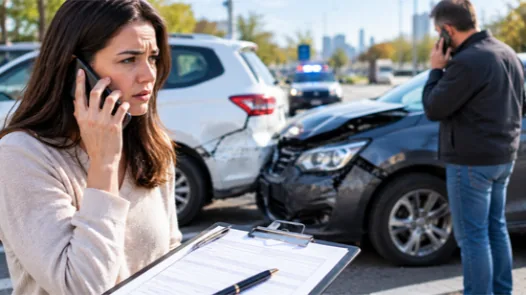
You're stopped at a red light on Cicero Avenue when a car slams into your bumper. The other driver steps out, mumbles that he doesn't have insurance, and drives off before the police show up. You're left with a sore neck, a car that won't start, and nobody's policy to call.
This is exactly why uninsured motorist coverage exists. It's part of your own auto policy, and it pays when the person who hurt you can't. Many Illinois drivers have never looked at it closely, and the amount on the page matters more than most people expect. Here is what it covers, what Illinois law says, and what to do if you ever need it. It comes up in many car accident claims, and the uninsured and underinsured motorist side has rules of its own.
What Uninsured Motorist Coverage Actually Does
Uninsured motorist (UM) coverage pays for your injuries when the driver who caused the crash has no liability insurance, or when that driver can't be found. Under 215 ILCS 5/143a, Illinois auto liability policies must include coverage for people "legally entitled to recover damages from owners or operators of uninsured motor vehicles and hit-and-run motor vehicles" because of bodily injury, sickness, disease, or death.
Those words "legally entitled to recover" are worth a second look. You still have to show the other driver was at fault, just as you would in any injury case. Our guide on how to prove negligence explains what that takes.
The law also treats a car as uninsured when its insurance company has been put into court-ordered rehabilitation or liquidation because it went insolvent. So a driver who paid for a policy can still count as uninsured if the company behind it failed.
Does Illinois Require You to Carry It?
Every driver in Illinois must carry liability insurance under 625 ILCS 5/7-601. The minimums come from 625 ILCS 5/7-203: $25,000 for injury to one person, $50,000 for injury to two or more people in one crash, and $20,000 for property damage. That coverage protects other people from you. It does nothing for your own injuries.
UM coverage works differently. Under 215 ILCS 5/143a-2, an insurer generally cannot issue or renew a policy without UM coverage equal to your bodily injury liability limits, unless you reject it in writing. You can also ask in writing for lower UM limits, and that choice binds everyone insured under the policy.
So in practice, most Illinois policies include it. Still, you may have lower limits than you think, or may have signed a rejection form years ago and forgotten. Pull out your declarations page and look for the UM line.
Why Most Drivers Should Want It
The state minimums are low. A hospital stay, a surgery, and a few months off work can pass $25,000 fast. If the person who hit you has no insurance, or only the bare minimum, there may be nothing close to enough to cover what you lost.
UM coverage fills that gap with your own policy. It is not a luxury if you drive on the Dan Ryan or Lake Shore Drive every day. Talk to your insurance agent about whether your limits match what you could actually lose, and know that Illinois law does not generally let you add up the UM limits from different vehicles on a policy. Whatever limit applies to your claim is the number to focus on.
What About Underinsured Motorist Coverage?
Underinsured motorist (UIM) coverage is the cousin of UM. It applies when the at-fault driver has insurance, but not enough. Illinois defines this by comparing limits, not damages. Under 215 ILCS 5/143a-2, a vehicle is underinsured when the bodily injury limits that apply to it are lower than your own underinsured coverage limits.
Your UIM limit is then reduced by what you recover from the at-fault driver's policy. Here is a simple example. You carry $100,000 in UIM coverage. The other driver has a $25,000 policy, and you collect all of it. The UIM coverage available to you is generally the $100,000 minus the $25,000, or $75,000. How your policy applies this should be checked by a lawyer, because wording varies.
Illinois law also says that settling for less than the other driver's limits does not, on its own, block an underinsured claim. Even so, do not sign a release before talking to a lawyer. Policies often have notice and consent conditions, and a careless release can cause trouble later.
Hit-and-Run Crashes Are Covered Too
The statute names hit-and-run vehicles right next to uninsured ones. If a driver hits you and leaves, your UM coverage may be where your claim goes. Call the police right away, get witness names, and take photos. We cover the full list in our guide to the steps after a hit-and-run accident. Your policy may have its own notice rules, so read it or ask a lawyer promptly.
Your Own Insurer Is Now on the Other Side
This part surprises people. When you make a UM claim, you are dealing with your own insurance company, but it still checks fault and damages, and it can dispute both. Being a loyal customer for ten years does not change that.
Illinois law sends disputes over coverage and damages to arbitration. Under 215 ILCS 5/143a, the case goes to the American Arbitration Association or to a three-arbitrator panel, and the award is binding up to $75,000 for one person, or $150,000 for two or more people in one crash, or the policy limits if those are lower.
Fault Still Matters in a UM Claim
Fault also still matters. Illinois bars recovery if you are more than 50 percent responsible, and lowers your award by your share if you are 50 percent or less. Our article on being partially at fault explains the basics. If your insurer pushes back, read our guide on what to do if the insurance company denies your claim.
Watch the Clock on UM Claims
Many Illinois policies set their own deadline for UM claims, often two years from the date of the accident. The Illinois Supreme Court enforced one in Country Preferred Insurance Co. v. Whitehead, 2012 IL 113365. The policy barred any suit, action, or arbitration not started within two years of the crash. The injured driver had not started anything in time, so her claim was over.
The court noted that without a specific contract limit, the ten-year statute for written contracts generally applies. Do not count on that. Check your policy, and treat two years as the working deadline unless a lawyer tells you otherwise. Our guide on filing deadlines covers why waiting hurts a case.
What to Do After a Crash With an Uninsured Driver
- Get medical care first, then call 911 so a police report exists.
- Write down the other driver's name, plate number, and any insurance details they claim to have.
- Take photos of the cars, the road, and your injuries. Our list of helpful evidence shows what matters most.
- Tell your own insurer about the crash promptly, but keep it short and factual.
- Skip recorded statements and releases until you have spoken to a lawyer.
Talk to a Lawyer Before You File
A UM or UIM claim looks simple on paper, but your own insurer controls the policy language, the arbitration process, and the clock. The attorneys at Panio Law Offices handle injury claims for clients across Chicago and the south suburbs. Contact the firm for a free consultation, and have your declarations page ready.
Frequently Asked Questions
Is uninsured motorist coverage required in Illinois?
Illinois requires every driver to carry liability insurance, and insurers generally must include UM coverage equal to your liability limits unless you reject it in writing. So it is built into most policies by default, but you should confirm it on your declarations page.
What are the minimum liability limits in Illinois?
The minimums are $25,000 for one person's injury, $50,000 for two or more people hurt in one crash, and $20,000 for property damage. These protect other people if you cause a crash.
What is the difference between uninsured and underinsured motorist coverage?
UM applies when the at-fault driver has no insurance or cannot be found. UIM applies when the driver has insurance but their limits are lower than your UIM limits. Your UIM limit is then reduced by what you collect from their policy.
Does UM coverage cover hit-and-run accidents?
Yes. Illinois law names hit-and-run vehicles alongside uninsured ones. Call the police right away and check your policy's notice rules.
How long do I have to make an uninsured motorist claim in Illinois?
Many policies require you to start a suit or arbitration within two years of the accident, and the Illinois Supreme Court has enforced that kind of clause. Read your policy and talk to a lawyer early.
Hit by a driver with no insurance, or not enough?
Contact the experienced Chicago personal injury attorneys at Panio Law Offices today for a free consultation and find out what your uninsured motorist coverage can do for you.